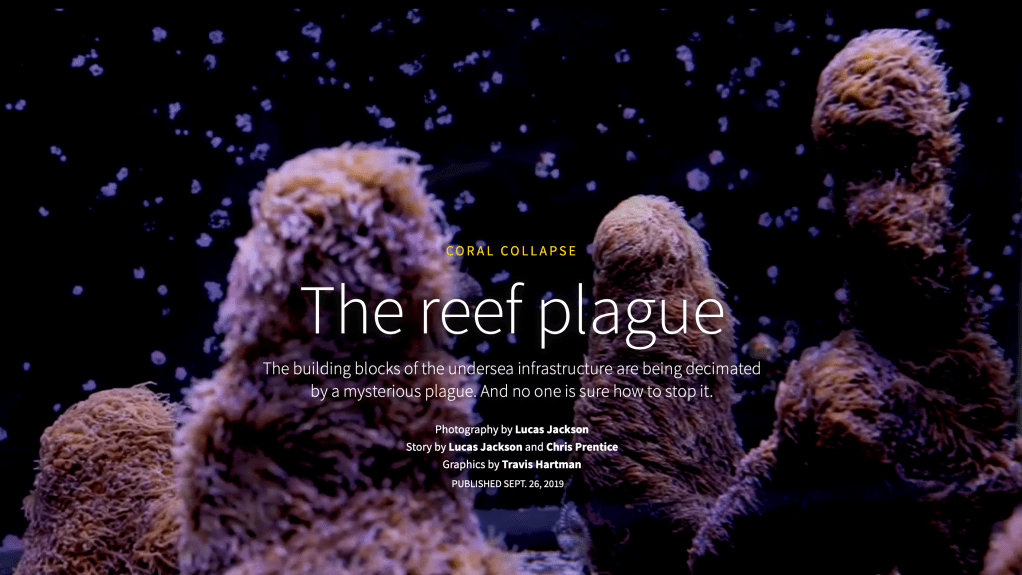
AN INNOVATIVE STORY FEATURE — THE REEF PLAGUE

The reef plague from REUTERS GRAPHICS is about a catastrophic plague which is decimating the coral species across the Caribbean Sea. The story feature displays an impressive and innovative journalistic approach in terms of its use of different mediums, such as photographs, gifs, graphics and videos.  Additionally, embedded in social media, it effectively engages the audience in this significant issue. Through this feature, we can find the prevailing trend of multimedia production in digital journalism.

The combination of various visual tools with the context is impressive as they serve different intention in the different parts and at the same time become complementary. 
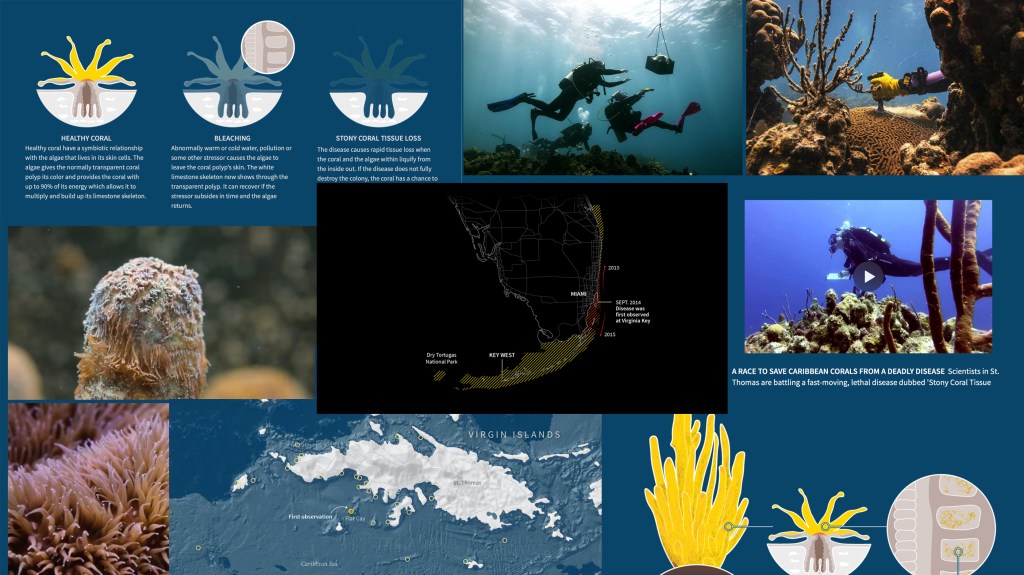
At the beginning of the report, the gif shows the movement of the reef in the deep sea, which provides a sense of vitality and thus attracts the audience to scroll down. Though the story opens with a vividly narrative lead, the professional scientific knowledge and historical background in the report seems an obstacle to hold the general audience’s attention. However, this information is still necessary for readers to get the idea about the severity of the disease. Therefore, the graphics and the animations in the report help the audience know how the disease destroys coral more intuitively and easily. The maps show the process of the disease spreading and at the same time interacts with the audience by requiring them to scroll and find out the changes in order. Additionally, the strong still photographs and four gifs enable the readers to immerse themselves in a realistic visual environment and may arouse their sympathy and further actions as visuals can have a significant impact on the audience’s attitude and involvement.

Using different media is also a way to cater to the public preference. Nowadays, we tend to lose our patience for long-time reading, and can be distracted easily. At the same time, the preference for visualisation is also rising. A report from VOX has cited a study showing that “readers quickly scroll right past the words to the video, to the picture, then to the next piece of media, and so on”. That is also why the multimedia report is increasingly significant in the society of attention economy.
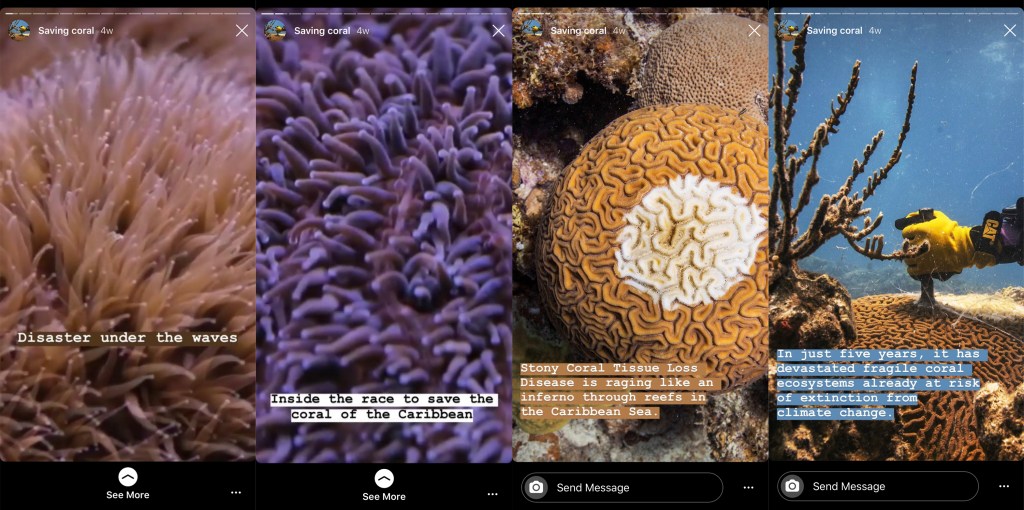
Besides the excellence in reporting, social media also promotes the communication effect of this feature. Reuters not only tweeted the video clips in the feature but also posted two photos from the report on Instagram and 18 Instagram stories which can be seemed as a concentration of the feature. There’s also a hyperlink to the report in the profile introduction of @reuters on Instagram. Nowadays, people get news mainly from social media instead of browsing the news websites. As twitter and instagram become powerful tools in journalism, embedding story features on the social media can help reach more potential audience.

The reef plague may seem very far from people’s life and needs professional knowledge to know the fact clearly but it is related to the public interest. We need and must know the disaster the coral encounters and the influence to the humans. This story feature using the full range of creative techniques tells the subtle yet important story in an easy and compelling way, holding the public attention and letting us know the fact comprehensively. Embedded in the social media, it also reaches the general public and promotes the engagement. Therefore, each element in this story feature serves the value of informing and entertaining the public.
What’s Hidden

Becoming a GCP student facilitator

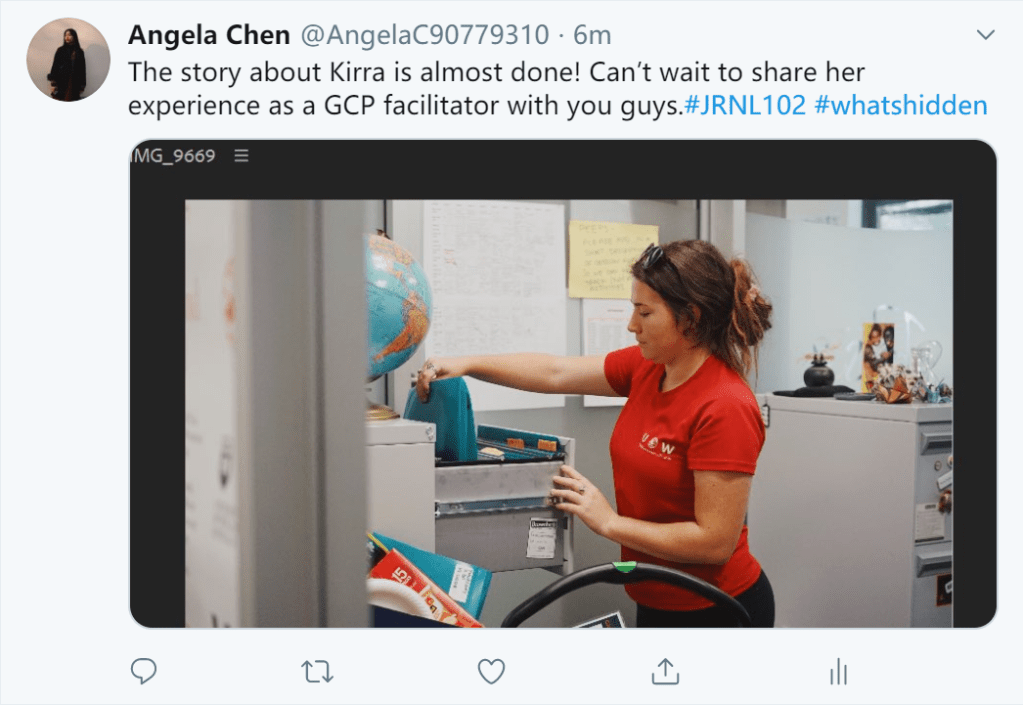
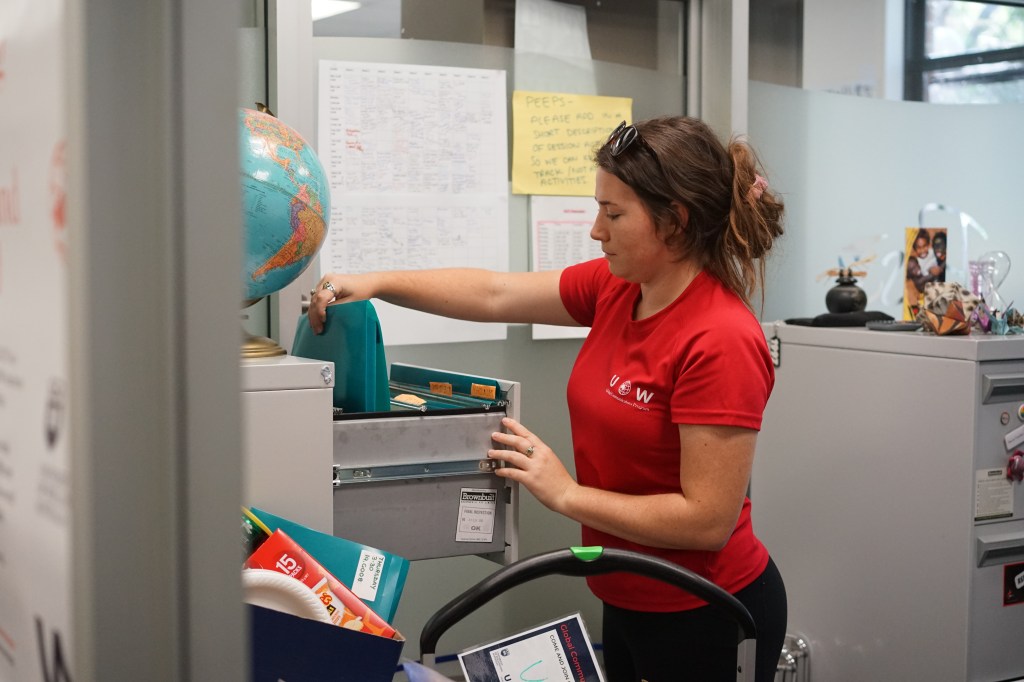
Putting on the red T-shirt with the words “Connecting students from around the world”, Kirra is not just a quiet third-year student. She is a student facilitator of GCP.

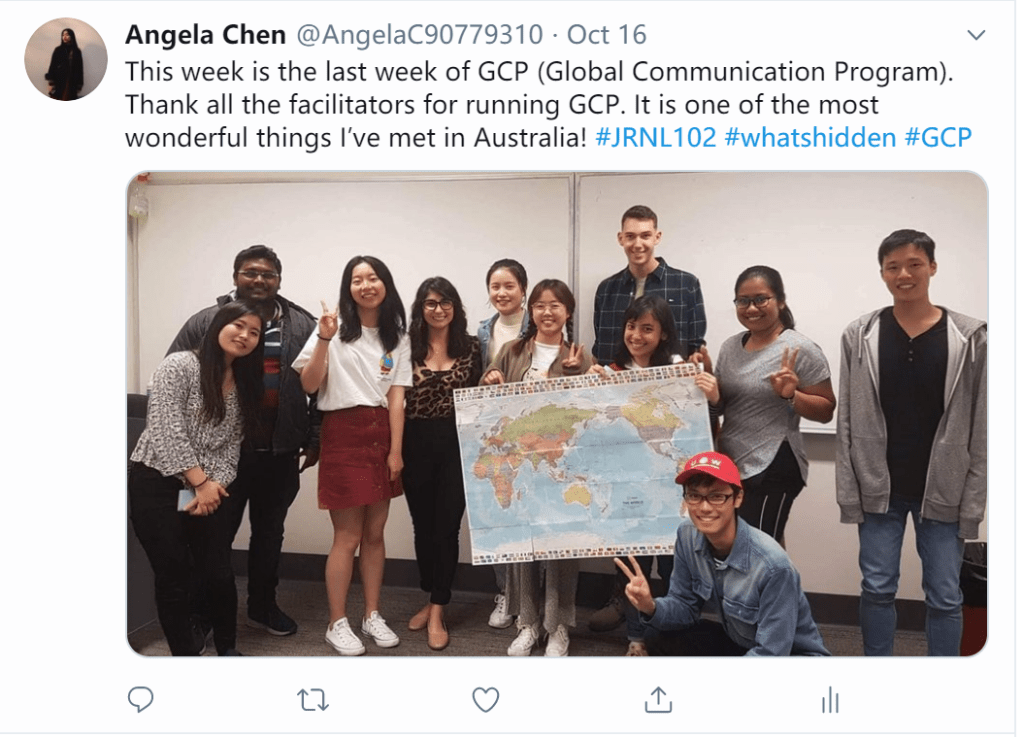
Global Communicators Program (GCP) is a program for both domestic students and international students to build friendships and learn about diverse cultures. Each GCP session usually includes five to twenty students from different countries and a GCP facilitator need to organize the conversations and games to include every participant.

Recollecting the original reason for attending the GCP, Kirra from Wollongong said she wanted to meet people with different cultural background. Gradually she found it was also good to just unwind in GCP.

However, after becoming a GCP student leader, the meaning of GCP to her has altered. As a quiet girl, presiding a session and holding everyone’s attention was a challenge at first. Fortunately, she got help from other experienced leaders and the cooperative participants.

For many participants, GCP is one of the most memorable things in the university.

“GCP is my favorite place in the university. It is always enjoyable and the facilitators help me learn more about Australian culture,” said a Japanese exchange student Yuki who attended GCP over 100 times this semester.

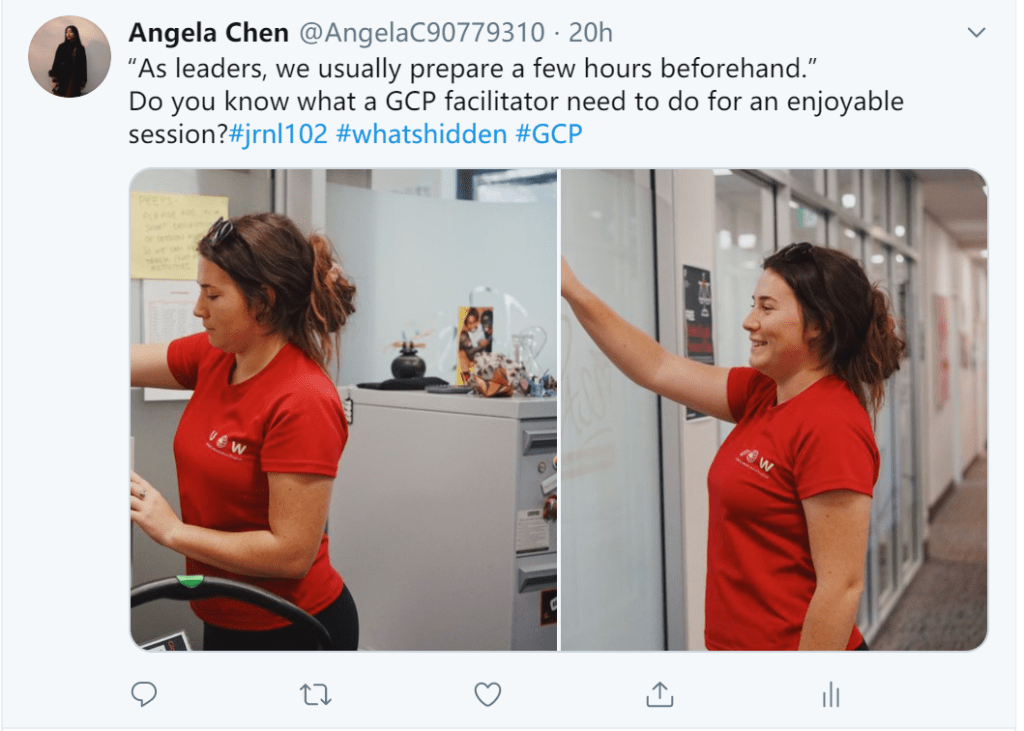
To make a GCP session helpful and interesting, the facilitators usually need to prepare for a long time beforehand, collecting name tags, preparing snacks and an attending sheet, and thinking about various games and conversation topics which can include everyone. When the participants are laughing and joking, the facilitators have to keep an eye on time; when someone seems to be ignored, they need to engage and encourage him or her.

 “Sometimes if we have a big session, it is really hard to get everyone to listen to what you are saying,” Kirra said.

However, Kirra still prefers being a GCP facilitator. This job is not easy but the meaning of it outweighs its difficulty.

To Kirra, the reason for being a GCP leader may be beyond just relaxing.

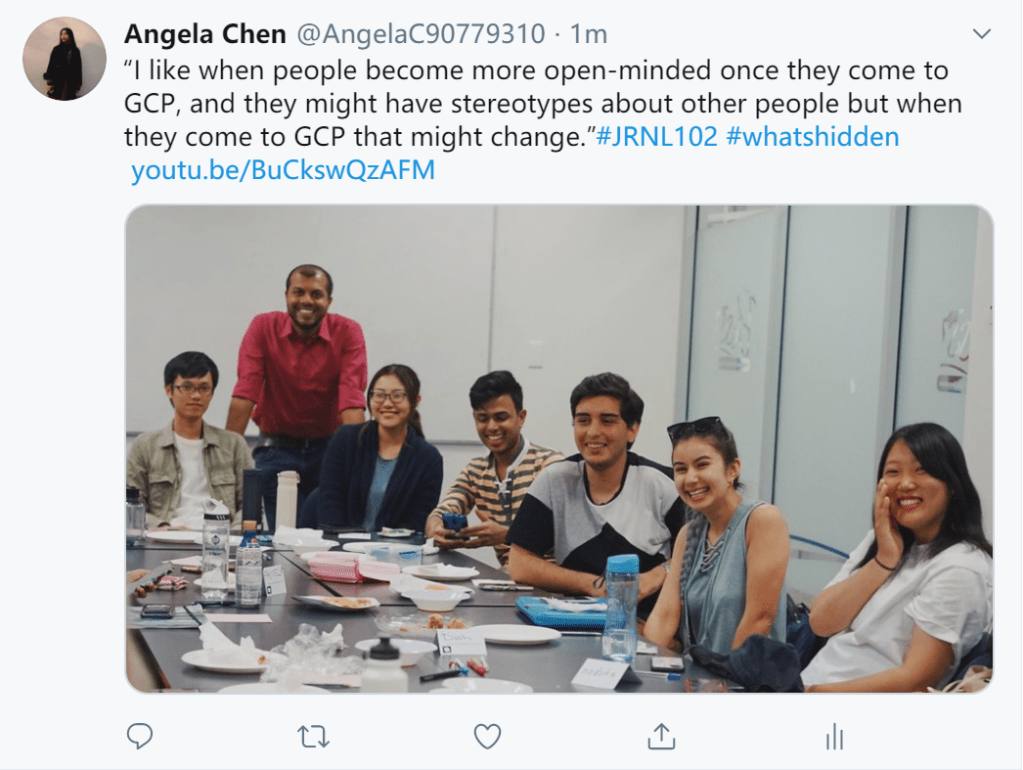
“I like when people become more open-minded once they come to GCP, and they might have stereotypes about other people but when they come to GCP that might change.”

In the video on GCP website, a participant said “GCP is family”. And the reason behind may be the facilitators like Kirra who make GCP warm and welcoming.

Kirra also hopes more local students can come to GCP so that the local students can be more open-minded and the international students can get help to integrate into Australia more smoothly.

“If everyone seems to have a good session, then that’s my aim.”

What’s Hidden

Becoming a GCP student facilitator

Putting on the red T-shirt with the words “Connecting students from around the world”, Kirra is not just a quiet third-year student. She is a student facilitator of GCP.

Global Communicators Program (GCP) is a program for both domestic students and international students to build friendships and learn about diverse cultures. Each GCP session usually includes five to twenty students from different countries and two GCP facilitators who need to organize the conversations and games and make sure everyone engages.

Recollecting the original reason for attending the GCP, Kirra from Wollongong said she wanted to meet people with different cultural background. Gradually she found it was also good to just unwind in GCP.

However, after becoming a GCP student leader, the meaning of GCP to her has altered. As a quiet girl, presiding a session and holding everyone’s attention was a challenge at first. Fortunately, she got help from other experienced leaders and the cooperative participants.

To many participants, GCP is one of the most memorable things in the university.

“GCP is my favorite place in the university. It is always enjoyable and the facilitators help me learn more about Australian culture,” said a Japanese exchange student Yuki who has attended GCP over 100 times this semester.

To make a GCP session helpful and interesting, the facilitators usually need to prepare for a long time beforehand, collecting name tags, preparing snacks and an attending sheet, and thinking about various games and conversation topics which can include everyone. During the session, when the participants are laughing and joking, the facilitators have to keep an eye on time; when someone seems to be ignored, they need to involve and encourage him or her.

 “Sometimes if we have a big session, it is really hard to get everyone to listen to what you are saying,” Kirra said.

However, Kirra still prefers being a GCP facilitator. This job is not easy, but the meaning of it outweighs its difficulty.

To Kirra, the reason for being a GCP leader may be beyond just relaxing.

“I like when people become more open-minded once they come to GCP, and they might have stereotypes about other people but when they come to GCP that might change.”

In the video on GCP website, a participant said “GCP is family”. And the reason behind it may be the facilitators, like Kirra, who make GCP warm and welcoming.

Kirra also hopes more local students can come to GCP so that the local students can be more open-minded and the international students can get help to integrate into Australia more smoothly.

“If everyone seems to have a good session, then that’s my aim.”

GLOBAL MUSIC

Havana and Senorita

With two smash singles Havana and Senorita, the Cuban-American singer and songwriter Camila Cabello seems to become the Generation Z’s biggest pop star. Both Havana and Senorita are Latin songs and may make people confused whether they are cultural appropriation or cultural appreciation.

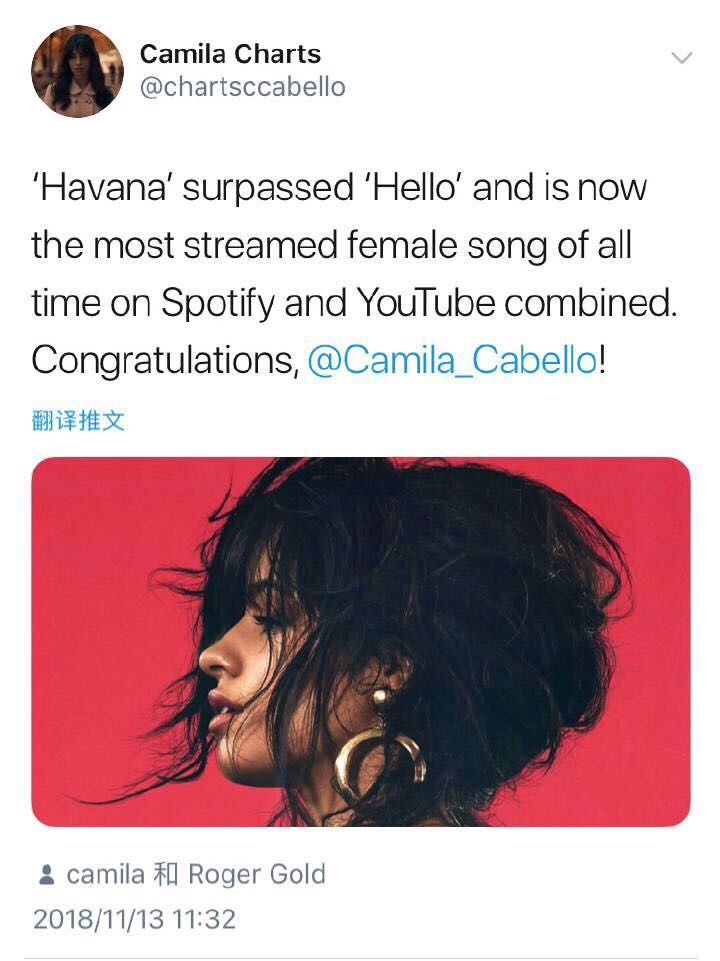
Havana is the lead single of Cabello’s debut solo album Camila, which topped the iTunes chart in many countries including the UK and the U.S. She integrated Latin music feature into the song, making it outstandingly catchy. The flow of the melody is appealing from the very beginning and Cabello has a charming hoarse voice that suit the song’s lazy tune very well. Though the simple lyrics keep being repeated, by using different instruments like saxophones and conga, a Cuban percussion instrument, the mood of the song was intensified gradually to make the audience excited.

A year after Havana hit the global music market, Camila Cabello collaborated with Canadian singer who is also her boyfriend, Shawn Mendes, releasing the song Señorita. It is also an airy, mid-tempo Latin pop track which is commented as “effortlessly steamy and wonderfully lightweight” by Shaad D’Souza from The Fader.

Therefore, these two songs are good examples of the global flows from south to north in media, but they also arouse questions about cultural appropriation.

Cultural appropriation refers to the ways people adopt or adapt an aspect of another’s culture and make it their own (Heyd, 2003; Hladki, 1994). Learning other cultures, especially the minority cultures, can inspire new ideas but the key point is whether it is taking or making. As said in an article from The Washington Post, “when Justin Timberlake beatboxes, or Taylor Swift raps, or Miley Cyrus twerks to a trap beat, it feels like taking. Nothing is being invented other than a superficial juxtaposition.”

However, from my perspective, Havana and Senorita are definitely not that cultural appropriation. Frist of all, Camila Cabello herself was born in Havana, Cuba and have lived there for five years. Because of her Latin heritage, the Latin character and culture is integrated into this song in a very natural and attractive way. This may also contribute to the fact that these two songs are more successful than Cabello’s other songs. They are unique, sounding fresh and new. Another reason is that Cabello did a good job in mixing the Cuba culture to her pop songs. She “made” new marvelous things, not just “taking” things awkwardly. Therefore, this unique Latin style makes Havana and Senorita stand out from hundreds of thousands of pop songs in contemporary music industry which hungers for diversity.

To adapt other countries’ culture, especially the marginal culture from some developing countries will be good for the global music market because it makes music more diverse and also help promote the communication of different cultures. We hope to see more cultural appreciation instead of cultural appropriation.

Reference:

Heyd, T 2003, ‘Rock art aesthetics and cultural appropriation’, The Journal of Aesthetics and Art Criticism, vol.61, no. 1, pp. 37–46.

Hladki, J 1994 ‘Problematizing the issue of cultural appropriation’, Alternate Routes: A Journal of Critical Social Research, 11, pp. 95–119.

The 5 hardest questions in pop music By Chris Richards 2018 https://beta.washingtonpost.com/news/style/wp/2018/07/02/feature/separate-art-from-artist-cultural-appropriation/ [viewed August 30]

Why isn’t more mainstream pop as fun as Camila Cabello and Shawn Mendes? By SHAAD D’SOUZA 2019 https://www.thefader.com/2019/06/25/camila-cabello-shawn-mendes-senorita-essay-review [viewed August 31]

GLOBAL FILM

Parasite: a global flow from north to south

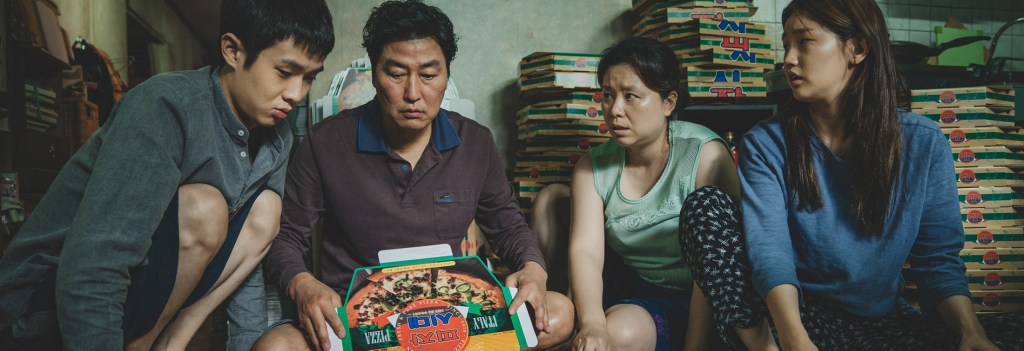
In May this year, a South Korean film, Parasite, won the Palme d’Or at the 2019 Cannes Film Festival. It is the first Korean film receiving this award. Parasite has received worldwide acclaims and been sold to 192 countries and regions, which is undoubtedly a huge success exemplifying the global flow from south (poorer countries) to north (wealthier countries).

Parasite tells the story of a family of four who live in a shabby semi-basement rental house. After Ki-woo, the son, became the English tutor of a wealthy family, he managed to get all of his family a job in that lavish house like parasites. The film reflects the increasingly serious chasm between the rich and the poor, which is also a big issue existing in many other countries. For example, a Japanese flim, shoplifters, which won the Palme d’Or last year also mirrors the lives of poverty.

Parasite is a definitely cultural hybridization. It “borrows the idea and practice of the blockbuster and adapting them to local circumstances” (Berry, 2003). In terms of the theme, I think what Parasite wants to convey is similar to the Great Gatsby, a film released in 2013 about the hypocritical wealthy class and the poor class who managed to become a billionaire. And then Parasite narrates it in a Korean style to de-westernize and create something for the local market.

However, Parasite not only gains national box success, but also wins worldwide attention. Besides the film’s universal theme, the director Bong Joon-ho can also be attributed to its global success. Bong is famous to the foreign audience for his film Okja which is a 2017 South Korean and American action-adventure film. And Parasite is the director’s first film made fully within the Korean system in a decade, since 2009’s Mother. As a commercial film, it thinks local but acts global. An Australian website, filmink, commented that this is Bong’s best film since 2003’s Memories of Murder, and makes a good case for being the first out-and-out classic of Korean cinema since 2016’s The Handmaiden.

In addition, it worth noticing that when Parasite was playing overseas the subtitles also tried to approach the cultural proximity to let the foreign audience makes sense better. For example, “Kakao talk” which is a popular Korean social media app is translated into What’s app when it is filmed in Australia and “Seoul University”, the best university in South Korea, is translated into the more well-known “Oxford”.

As Arjun Appadurai (1996) noted, globalization is not a single process, but a multiplicity of localized events as different cultures are brought into contact. The blockbusters from Hollywood become increasingly focused on spectacular scene, advanced digital technology and thrilling plot, and the cost is that the stories became homogeneous and simple. Meanwhile, Hallyuwood’s de-westernization becomes more and more attractive not only to the local but also to the worldwide audience. Therefore, Korean waves make the global film market heterogeneous as the audience from all the countries become more open to the different culture.

References:

-Berry, C 2003, ‘“What’s big about the big film?”: “de-Westernizing” the blockbuster in Korea and China’, in J. Stringer (ed.), Movie Blockbuster, Routledge, London, pp. 217-229.

-Appadurai, A 1990, ‘Disjuncture and Difference in the Global Cultural Economy’ Theory, Culture & Society, Vol. 7 no. 2, pp.295-310.

-Parasite By Andrew Blackie 2019 https://www.filmink.com.au/reviews/parasite/ [Viewed August 30]

GLOBAL TELEVISION

The global success of Norwegian TV episodes Skam

Nowadays, the cross-cultural circulation of TV programs has been increasingly evident. Although TV programs produced by American media such as Netflix are continuously the most influential cultural products, there have occurred some TV dramas from other countries that gained great global success, like the Norwegian TV series Skam.

Skam, which means shameless in English, is a Norwegian teen drama series produced by the Norwegian government-owned NRK P3 in 2015-2017. It is about the daily life of high-school teenagers in West End Oslo. Each of four seasons is told from different person’s perspective, focusing on various topics including relationship difficulties, homosexuality, mental health issue and sexual assault.

Despite the original envision as mainly appealing to adolescent girls, Skam is proved to have universal appeal to the worldwide audience. Not only has Skam broke all streaming records in Norway, but also it has been remade and “localized” in 8 different cultural contexts, including neighbouring countries France, Italy and even UK and the U.S.

So why is Skam so popular all over the world?

First of all, a distinctive feature of Skam is called “concurrent narration” (Andersen & Linkis, 2019) —every character has his or her own Instagram and Facebook accounts to post some screen dumps from text messages. From my perspective, this form of narration not only makes audience more close to the series but also conforms to the young and popular social media culture which has swept the whole world. Therefore, Skam has the potentiality to become transnational.

In addition to this innovative way of narration, its globalization of content also contributes to its unprecedented international success. “Common to all mass culture successes, no matter what the country, the first requirement is that they fit the existing culture” (Kottak, 1990). Although the high school life differs from regions to regions, the problems teenagers were once confronted with are similar and some typical ones have been reflected in the Skam, making large audience feel as if they were the characters in the Oslo. A review on imdb said, “the show mirrors all of us, and lets us look at our own hidden fears and prejudices in a clever way.” For instance, season 3 is about the process that Isak realize and confess his sexual identity, but, for me and maybe other audience, it is also an experience of learning how to accept the authentic “yourself”.

Therefore, to some extent, what makes Skam stand out phenomenally is the notion of “cultural shareability” (Singhal & Udornpim, 1997), such as the use of some universal themes and archetypes. Therefore, although I’m from China, I still feel that Skam resonates with me. And I think that’s the most significant reason for its phenomenal global popularity.

Reference:

– Andersen, TR; Linkis, ST 2019, ‘As We Speak: Concurrent Narration and Participation in the Serial Narratives ‘@I-Bombadil’ and Skam’, Narrative Vol. 27 no.1, pp. 83-106

– Kotak, CP 1990, Prime-time society, Belmont, CA: Wadsworth.

– Singhal, A & Udornpim, K 1997, ‘Cultural shareability, archetypes and television soaps: ‘Oshindrome’ in Thailand’. Gazette, vol.59, no. 3, pp 171-188.

– IMdb ‘Review of Skam’ https://www.imdb.com/review/rw3612508/?ref_=tt_urv [viewed August 12]

Design a site like this with WordPress.com
Get started