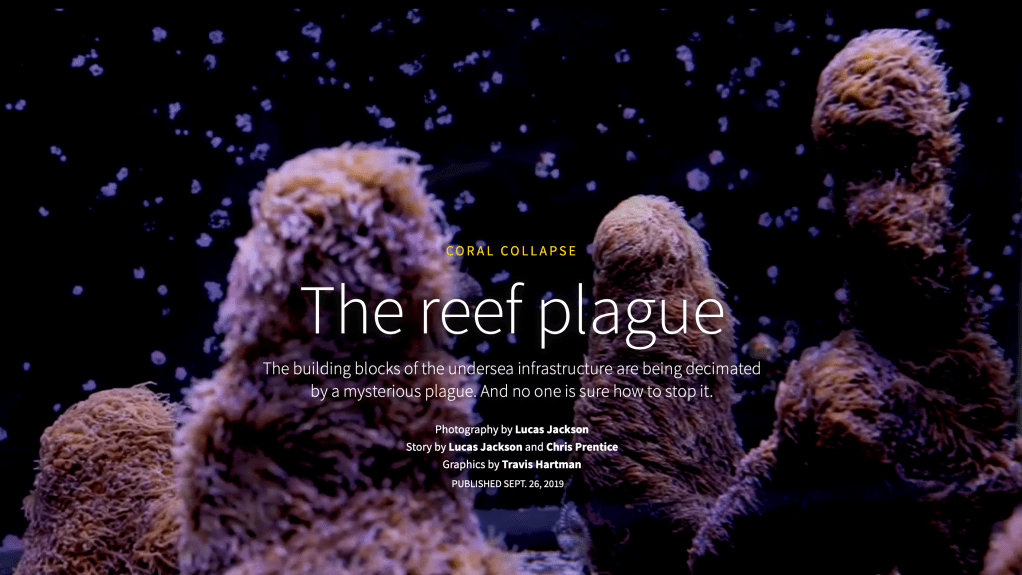
The reef plague from REUTERS GRAPHICS is about a catastrophic plague which is decimating the coral species across the Caribbean Sea. The story feature displays an impressive and innovative journalistic approach in terms of its use of different mediums, such as photographs, gifs, graphics and videos. Additionally, embedded in social media, it effectively engages the audience in this significant issue. Through this feature, we can find the prevailing trend of multimedia production in digital journalism.
The combination of various visual tools with the context is impressive as they serve different intention in the different parts and at the same time become complementary.
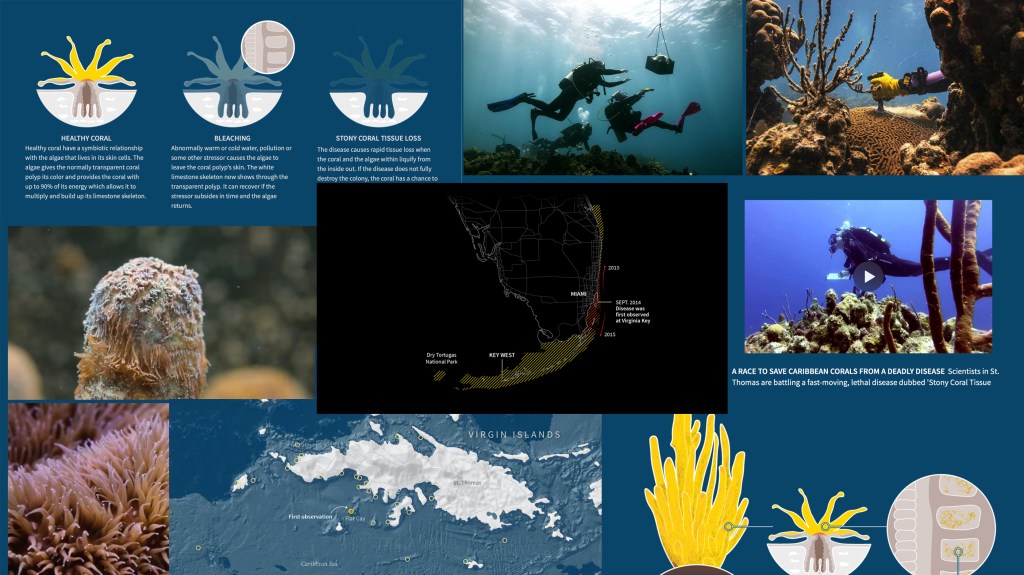
At the beginning of the report, the gif shows the movement of the reef in the deep sea, which provides a sense of vitality and thus attracts the audience to scroll down. Though the story opens with a vividly narrative lead, the professional scientific knowledge and historical background in the report seems an obstacle to hold the general audience’s attention. However, this information is still necessary for readers to get the idea about the severity of the disease. Therefore, the graphics and the animations in the report help the audience know how the disease destroys coral more intuitively and easily. The maps show the process of the disease spreading and at the same time interacts with the audience by requiring them to scroll and find out the changes in order. Additionally, the strong still photographs and four gifs enable the readers to immerse themselves in a realistic visual environment and may arouse their sympathy and further actions as visuals can have a significant impact on the audience’s attitude and involvement.
Using different media is also a way to cater to the public preference. Nowadays, we tend to lose our patience for long-time reading, and can be distracted easily. At the same time, the preference for visualisation is also rising. A report from VOX has cited a study showing that “readers quickly scroll right past the words to the video, to the picture, then to the next piece of media, and so on”. That is also why the multimedia report is increasingly significant in the society of attention economy.
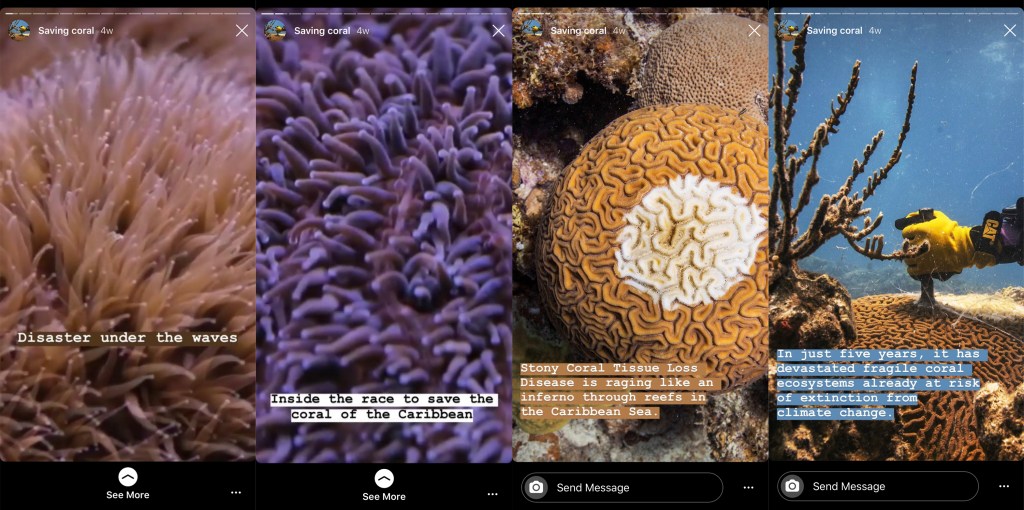
Besides the excellence in reporting, social media also promotes the communication effect of this feature. Reuters not only tweeted the video clips in the feature but also posted two photos from the report on Instagram and 18 Instagram stories which can be seemed as a concentration of the feature. There’s also a hyperlink to the report in the profile introduction of @reuters on Instagram. Nowadays, people get news mainly from social media instead of browsing the news websites. As twitter and instagram become powerful tools in journalism, embedding story features on the social media can help reach more potential audience.
The reef plague may seem very far from people’s life and needs professional knowledge to know the fact clearly but it is related to the public interest. We need and must know the disaster the coral encounters and the influence to the humans. This story feature using the full range of creative techniques tells the subtle yet important story in an easy and compelling way, holding the public attention and letting us know the fact comprehensively. Embedded in the social media, it also reaches the general public and promotes the engagement. Therefore, each element in this story feature serves the value of informing and entertaining the public.
 ThisisAngela